Friday, October 21, 2011

Essay


Is Cyber Terrorism (also known as Cyber Warfare) a serious threat to Australia?
It is the aim of this research paper to research, clarify and decide upon the best answer to the question posed, using resources gathered online, in academic findings, in books and through the library database in order to gain a fair and unbiased analysis.
My hypothesis is that, currently Cyber Terrorism doesn’t pose a major threat, but as we become more dependent on the internet as a nation, we become more at risk.
To clarify the meaning of Cyber Terrorism I first looked at Andrew M.Colarik’s, ‘Introduction to Cyber Warfare and Cyber Terrorism’, where he states,
“The term Cyber Terrorism was coined in 1996 by combining the terms cyberspace and terrorism. The term has become widely accepted after being embraced by the United States Armed Forces. A report generated in 1998 by the Center for Strategic and International Studies was entitled Cybercrime, Cyberterrorism, Cyberwarfare”
Cyber Terrorism has been acknowledged by the world and measures are now being taken to counteract it.
As the world’s leading super power, America sets the standard for all first world countries including Australia.  America has therefore begun a new initiative that is dedicated to the threat of Cyber Terrorism, which they are calling Cybersecurity. On the website for the White House, President Obama is quoted on this new system,
“Cyber threat is one of the most serious economic and national security challenges we face as a nation” and that “America's economic prosperity in the 21st century will depend on cybersecurity.”
His announcement comes with the promise of hardening digital infrastructure to be more resistant to penetration and disruption; improving ability to defend against sophisticated and agile cyber threats; and recovering quickly from cyber incidents—whether caused by malicious activity, accident, or natural disaster. 
In 2008, the Washington Times reported that as many as thirty countries were attending a global conference aimed at the prevention and response of Cyber Terrorism.
The Australian government in accordance with ASIO are now working to make sure that we are prepared for any attacks through Cyber Terrorism.
In a report submitted by ASIO to the Australian Government they state,
“The rapid increase in the world’s reliance on information technology and the telecommunications sector has created a persuasive new vector through which state and non-state actors may conduct espionage or disruptive actions to damage national security.”
It is reassuring that our country, and others, are taking the necessary steps to protect us from an attack through Cyber Terrorism but are these preventative measures more to calm the general public than counteract any real threat?
Cyber Terrorism has been sensationalised by the media and the film industry.
If you watch any recent science fiction or action film you will most likely see the enemy using his mobile phone or computer to organise his attacks. With the accessibility of iPhones, wirelessly connecting home electronics and the introduction of smart technology cars who virtually drive themselves it’s no wonder consumers are willing to believe that the film concepts such as Gamer (controlling people’s brains through wireless internet connection) are quite possible, and with computers now being an addition to almost all the homes in Australia, this isn’t likely to change.
The media is renowned for reported a more sensationalised story rather than the cold, hard facts.

With headlines such as “Cyber Terrorism is the next big threat, say experts” the public feels an overwhelming need for the government to take action and so in response the world leaders are beginning to take action, though it seems that these won’t really be necessary until further communication technology advancements.

There are many myths surrounding Cyber Terrorism and these are only made worse by unreliable online material.  Current myths include the ease with which a person can hack into security systems, charged by the recent actions of online groups who have gained access to the Sony Playstation network
Although the media, internet and film industry may be creating an awareness of Cyber Terrorism,   
much of this isn’t necessarily helpful to government agencies who are working to protect the country.
As we develop further into communication technology, so too do the criminals in this world, Cyber
Terrorism will be in our future.
The opinions in summary are these, first there are those who believe that it is a urgent matter and must be addressed immediately or as a nation we will be attacked. Second is the opinion that this is a future matter and will eventually lead to stronger consequences but at present it is not a pressing concern for the governments and only needs a counter measure.
I conclude, the overall consensus is that the Cyber Terrorism threat is present and will be in the future. This leads me to believe that we are currently under threat but it is unnecessary to take extreme measures in order to protect us, even the most basic preventatives such as needing identification to own a mobile phone works.

Bibliography
Janczewski, Lech J., and Andrew M. Colarik (eds). "Introduction to Cyber Warfare and Cyber Terrorism". Cyber Warfare and Cyber Terrorism. IGI Global. © 2008. Books24x7. <http://common.books24x7.com.libraryproxy.griffith.edu.au/toc.aspx?bookid=20791> (accessed October 17, 2011)
McDonald, Timothy. 2009. Experts say cyber-terrorism threat overstated. The World Today (Oct 26): n/a,http://search.proquest.com.libraryproxy.griffith.edu.au/docview/190299937?accountid=14543 (accessed October 17, 2011).
McCONNELL, ROB. 2009. Cyber terrorism: Fact or fiction? Belfast Telegraph, May 19, 2009. http://search.proquest.com.libraryproxy.griffith.edu.au/docview/337667679?accountid=14543 (accessed October 18, 2011).
Cyber terrorism. 2002. The National - CBC Television (Jan 21): n/a-n/a, http://search.proquest.com.libraryproxy.griffith.edu.au/docview/190674237?accountid=14543 (accessed October 19, 2011).
ASIO Security Report. 2010. The Security Environment 2010–11 and Outlook (Oct 8): n/a, http://www.asio.gov.au/img/files/Part-1.pdf (accessed October 19, 2011).

Monday, September 19, 2011

Week 9 - Response To Content

Internet Censorship or the 'Clean Feed'

“I talked briefly about the internet filter.  This is an important issue for all internet users in Australia.  It will not catch paedophiles.  This will do more than slow down the internet.  

What happens when Facebook is added to the list of banned websites? Or Youtube?
Ask our friends from China.  This is bad news for Australian Internet users and goes against the freedom that has made the internet awesome for the last 40 years.”

I find this topic very interesting as I, myself, am a frequent internet user and have been witnessing many fierce debates on internet forums and comments lately on this topic. It seems that not everyone can either agree or disagree with the usefulness of the so called ‘clean feed’ but nevertheless I still believe that this just another way to control the general public through the use of restrictions.
As stated by the Herald Sun, “New polling has found that most Australians - 55 per cent - believe Australia has become a nanny state and that government intervention and control in our daily lives has gone too far.”
And it’s not only being said, people on the internet are now pushing to stop this from happening, there is even a website made purely for his purpose, http://nocleanfeed.com/. Their opening statement claims, “The Australian Federal Government is pushing forward with a plan to force Internet Service Providers [ISPs] to censor the Internet for all Australians. This plan will waste tens of millions of taxpayer dollars and will not make anyone safer.

The filter will do almost nothing to prevent the people who are willfully making, trading, and accessing child sexual abuse material. This type of material is not distributed in the open and we need to fund police to continue to infiltrate and prosecute the groups of people responsible for creating and distributing such material.

The filter will not prevent children from accessing inappropriate material. The proposed category of censored sites will not be wide enough to provide assurances to parents. Parents will be much better served by installing one of the many voluntary filters that are currently available and ensuring that their children are adequately supervised and aware of risks they may face online.

The list of material to be banned includes much more than child sexual abuse material. The category of material that has been 'refused classification' includes websites about euthanasia, controversial movies such as 'Ken Park' and 'Baise-moi', and many games that are designed for people over 16 years of age.

Despite being almost universally condemned by the public, ISPs, State Governments, Media and censorship experts, Communications Minister Stephen Conroy is determined to force this filter into your home.”

To me, this just about sums up the importance of knowing what our government is doing and really considering how it will impact us. This filter is definitely not in our best interests but currently the only people who are really concerned are the ones who already use the internet regularly and understand the consequences of such an action. 

Poll finds most Australians believe Australia has become a nanny state. Viewed 19/09/2011

What is the 'Clean Feed'? Viewed 19/09/2011
 

Week 9 - Tutorial Task

Introducing My Essay Topic
Is Cyber Terrorism or Cyber Warfare a serious threat to our national security?  What are the most recent papers? Clarify what both sides of the argument claim and only then offer your reasoned opinion based on facts.


I have decided to base my essay on the threat that cyber terrorism poses to our national security, this topic interests me due to the nature of cyber warfare, the modernisation of a human threat has been present since the dawn of time. The idea of it is essentially that instead of using physical weapons such as bombs, firearms and chemical warfare, the enemy can attack directly by hacking into the cybersecurity of a country and using this to cause terrorist attacks ranging from gaining access to national secrets to infiltrating and damaging non-military networks.

The questions posed are towards the seriousness of the situation and whether it is worth treating as an actual threat or if it has been blown out of proportion by the media, there is a lot of information on the topic so I believe that will able to thoroughly examine and create a hypothesis based on the information presented. 

I first wish to look what exactly cyber terrorism is and how it affects Australia and other countries, giving a better understanding of the subject. 

Secondly I will be looking into what precautions and methods that governments are taking in order to protect themselves from this threat, if it is indeed worth devoting military time and funding towards.
Lastly I will be addressing the future problems and risks associated with cyber warfare and trying to offer insight towards what may be possible as communication technologies continue to develop at such a rapid rate.

With all the misconceptions (and the influence of the media and Hollywood) surrounding this topic I feel the conclusion may not be as straight forward as simply  taking a side and defending it, but more a personal opinion by the reader after being given all the facts and information available. 

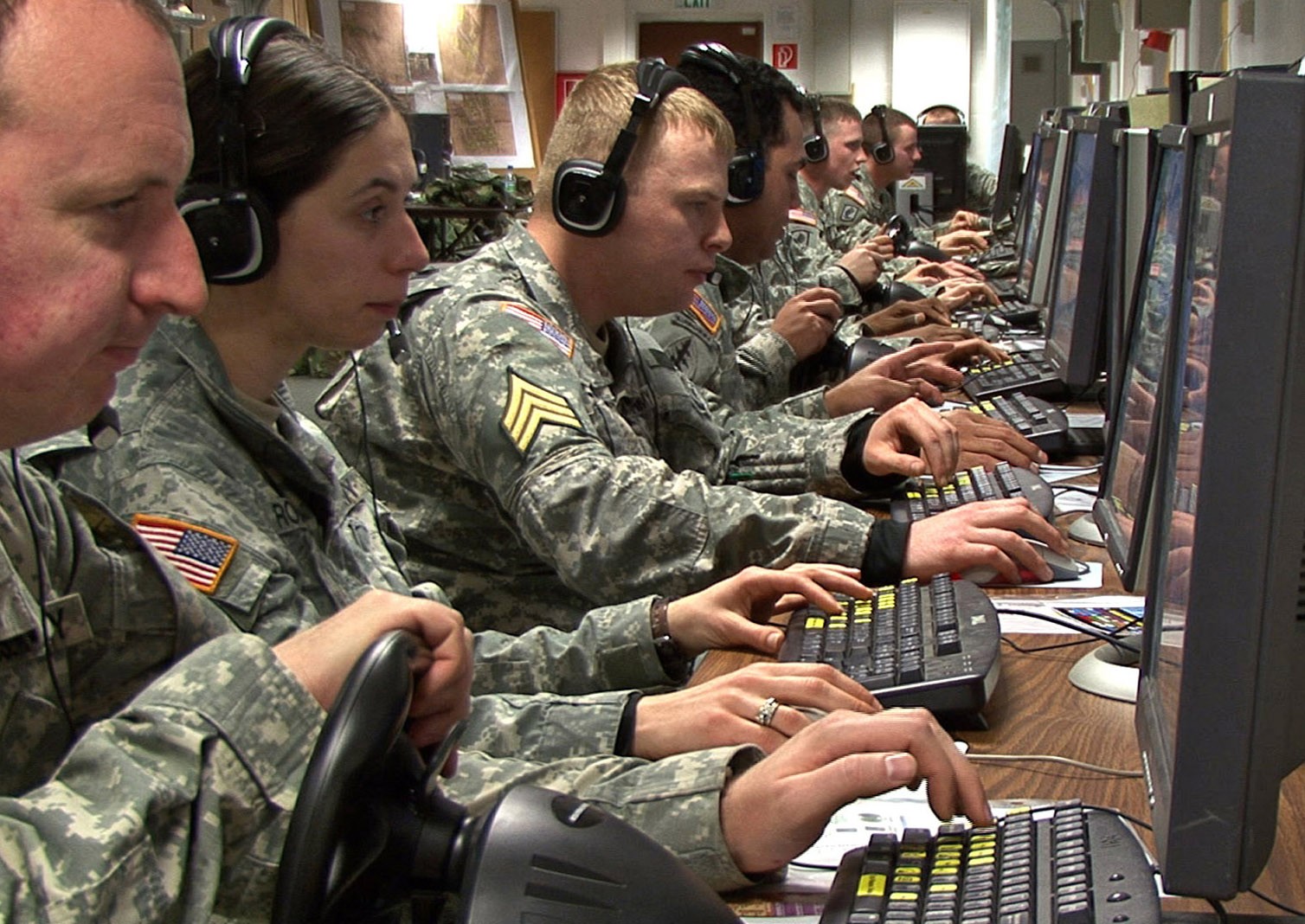
The photo in this article is being used under Creative Commons licensing. The original source can be found here.

What opportunities can you find for political participation via the internet. How many of the following can you achieve while sticking to your political beliefs?
Sign an e-petition.
I signed an e-petition through the Queensland Parliament website for a ban on the sale, use and promotion of prong collars on dogs. This was easy to do and follow my beliefs as I'm an avid animal rights believer and am signing petitions and donating regularly to this cause. I was petitioner number 8465443 and  the e-petition is as follows;

TO: The Honourable the Speaker and Members of the Legislative Assembly of Queensland
Queensland residents draws to the attention of the House the call to ban the sale, use and promotion of the torturous prong collar on dogs.  Banned in Victoria since 1997, prong collars are made of multiple wire prongs that puncture the neck.  Deemed unnecessary by experts the prong collar is an inhumane tool used to inflict pain and promote aggression.


Your petitioners, therefore, request the House to impose a complete ban in Queensland on the private, public and professional use, sale and promotion of prong collars.


Current e-petitions: Queensland Parliament. Viewed 19/09/2011.

What is Barak Obama up to today?
There are multiple ways to see what Barack Obama is doing during the day, one of those being Twitter. I follow his twitter feed already so finding him was easy, I enjoy his way of speaking and this doesn't conflict with my political beliefs either, today he is in Cincinnati;

Barack Obama

President Obama is in Cincinnati speaking about the American Jobs Act. Listen live:
8 hours ago via web

Barack Obama @BarackObama Washington, DC. Viewed 19/09/2011.

What are the Australian Government's plans to censor the internet (the so-called "Clean Feed")?
“In its 2007 election manifesto, the Australian Labor Party signalled that if elected it intended to introduce legislation that would require ISPs to offer a ‘clean feed’ internet service to all venues accessible by children, including homes, schools and libraries. The aim of the policy was to protect children from seeking out or inadvertently coming across content prohibited by the Australian Media and Communication Authority (ACMA) (that is, material that has been or would likely be denied classification for release in Australia). The clean feed would be achieved via the issuing of take-down notices to sites located on Australian servers, and the establishment of an ISP-level filter that would block access to a blacklist of overseas sites featuring among other things, child pornography and extreme violence (Labor’s Plan for Cybersafety, 2007). ”

Submission to the Mandatory Internet ISP Filter Consultation. Viewed 19/09/2011

Labor’s Plan for Cyber Safety, 2007. Viewed 19/09/2011
Find out who your local, state and federal representatives are. Send one a message.
I chose to send a message to the federal representative;


The Hon Teresa Gambaro MP: Thank you for your time.
Your comments have been successfully submitted via http://www.aph.gov.au


You have sent the following details:


Name: Bridget Wagland
Telephone Number: 04********
Email Address: b*************@g****.com
Comments: I think that you are doing a great job, thank you :)  
 
QLD

Members of Federal Parliament:
Members of State Parliament:
Local Government Contacts:

Local

State
Surfers Paradise --- Langbroek, John-Paul (LNP)
Shadow Minister for Police, Corrective Services and Emergency Services

Federal

Electoral Division of Brisbane (Qld) --- The Hon Teresa Gambaro MP

Party: Liberal Party of Australia 

http://www.aph.gov.au/house/members/member.asp?id=9K6 


LINKS TO YOUR REPRESENTATIVES. Viewed 19/09/2011


Look up the Queensland or Australian hansard to find the last time your local member spoke in parliament.

The Gold Coast Mayor, Ron Clarke, was announced as taking part in presenting the candidature file to the Commonwealth Games Federation at a lodgement ceremony in Kuala Lumpar with Anna Bligh, the president of the Australian Commonwealth Games Association, Sam Coffa, and the chairman of the bid team, Mark Stockwell on the 10/05/2011.

RECORD OF PROCEEDINGS; FIRST SESSION OF THE FIFTY-THIRD PARLIAMENT. Viewed on the 19/09/2011